New York City
Five boroughs, one housing market, and the strictest tenant protections in the country.
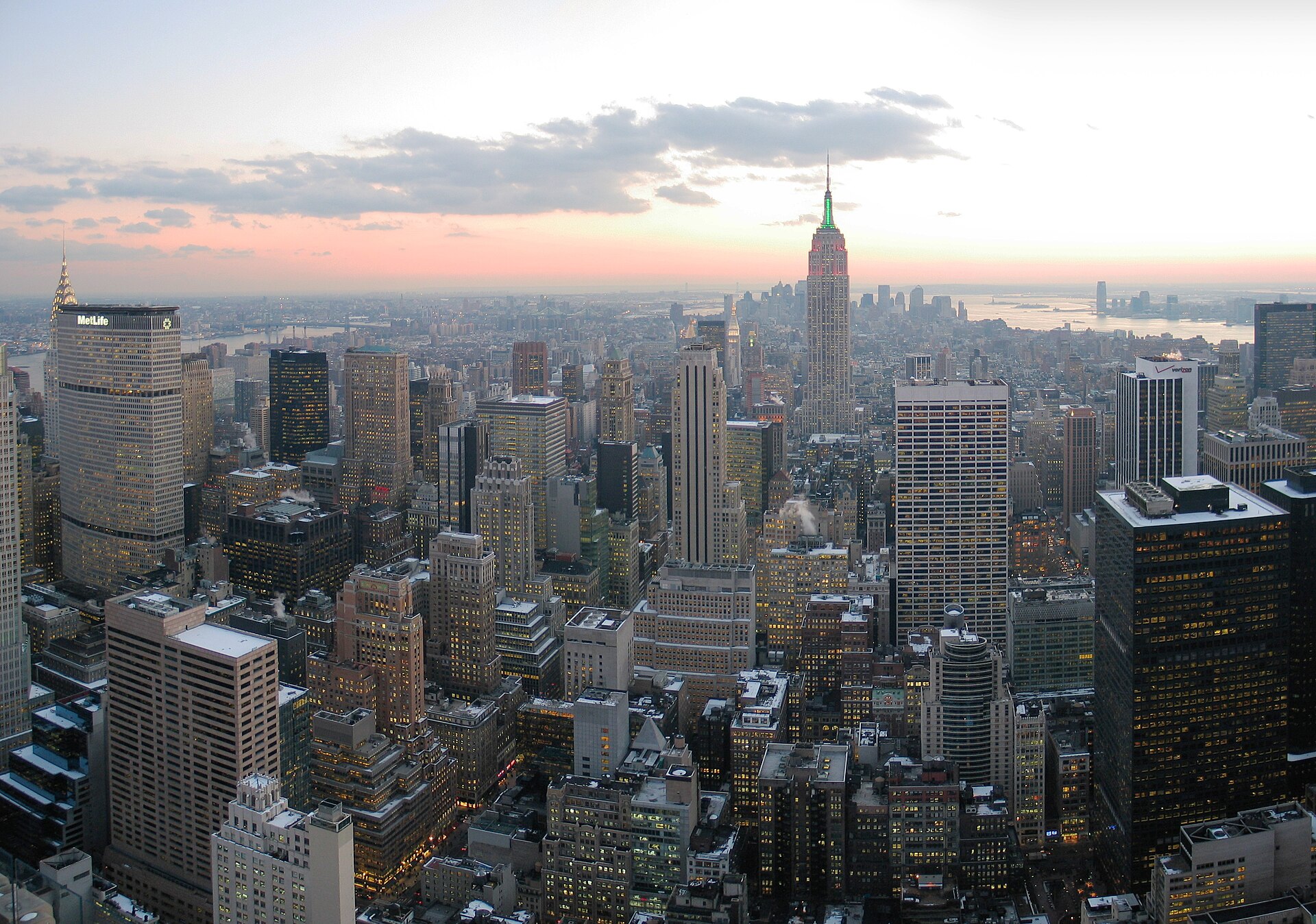
New York City is the most documented housing market in the United States. Every lot has a tax record, every building has a violation history, every complaint to 311 is public. CheckYourPlace reads those records address by address, so a listing photo is never the only thing you have to go on.
- Buildings indexed
- 778,038
- Cities in this metro
- 5
- Heat season
- Oct 1 to May 31
Boroughs: 5
Manhattan, Brooklyn, Queens, the Bronx, Staten Island
Heat season: Oct 1 to May 31
Landlords must heat by law during this window
Grid laid out: 1811
Commissioners' Plan, surveyed by John Randel
Pre-war cutoff: 1947
Buildings finished before this are called pre-war
Buildings indexed across New York City
History and architecture
New York's housing stock reads like a timeline. The Commissioners' Plan of 1811 fixed the Manhattan grid and with it the standard 25 by 100 foot lot, which is why so many older buildings are narrow and deep with windowless middle rooms.
The Tenement House Act of 1901 forced air shafts, interior plumbing and a window in every room, splitting the city's old stock into pre-1901 and post-1901 construction. After 1947 came the post-war era: elevator buildings, white brick facades, lower ceilings and small balconies. From the 1980s the glass tower arrived, first in Midtown, then along the Brooklyn and Queens waterfronts.
Pre-war, before 1947
Thick walls, high ceilings, hardwood, often a walk-up, often no central air.
Post-war, 1947 to 1980
Elevators, uniform layouts, lower ceilings, more reliable plumbing.
Modern, after 1980
Glass and steel, amenity floors, in-unit laundry, higher monthly charges.
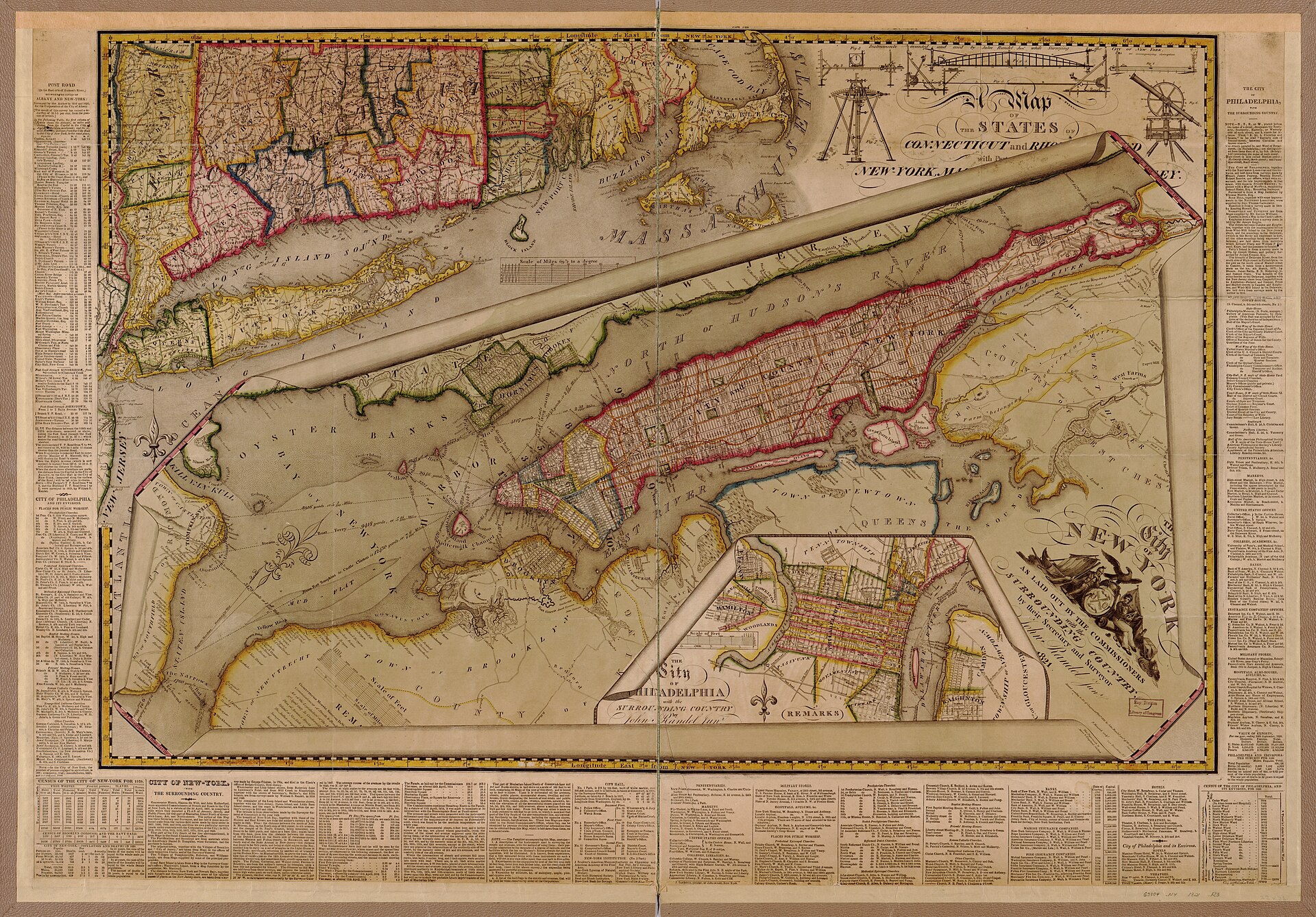
The Commissioners' Plan of 1811, surveyed by John Randel. It set the 12 avenues and 155 cross streets that still decide block shape, lot depth and daylight on Manhattan today.
Photo: John Randel, engraved by P. Maverick · Public domainLiving here as a renter
Roughly two thirds of New York households rent, the highest share of any large American city, and the rules that come with that are unusually detailed. Heat is required from October 1 to May 31. Hot water is required year round. Open violations against the building are public and so is the complaint history of the street.
Rent stabilization is the other thing that separates New York from everywhere else. It generally applies to buildings put up before 1974 with six or more units, and it caps how much the rent can rise each year. CheckYourPlace flags when an address is likely stabilized based on the public tax record, so you know to ask the landlord for the rent history.
Before you sign
Ask for the rent history if the building looks stabilized.
Check the building
Open housing violations and recent permits are both public records.
Check the street
Noise and heat complaints to 311 describe the block, not just the apartment.
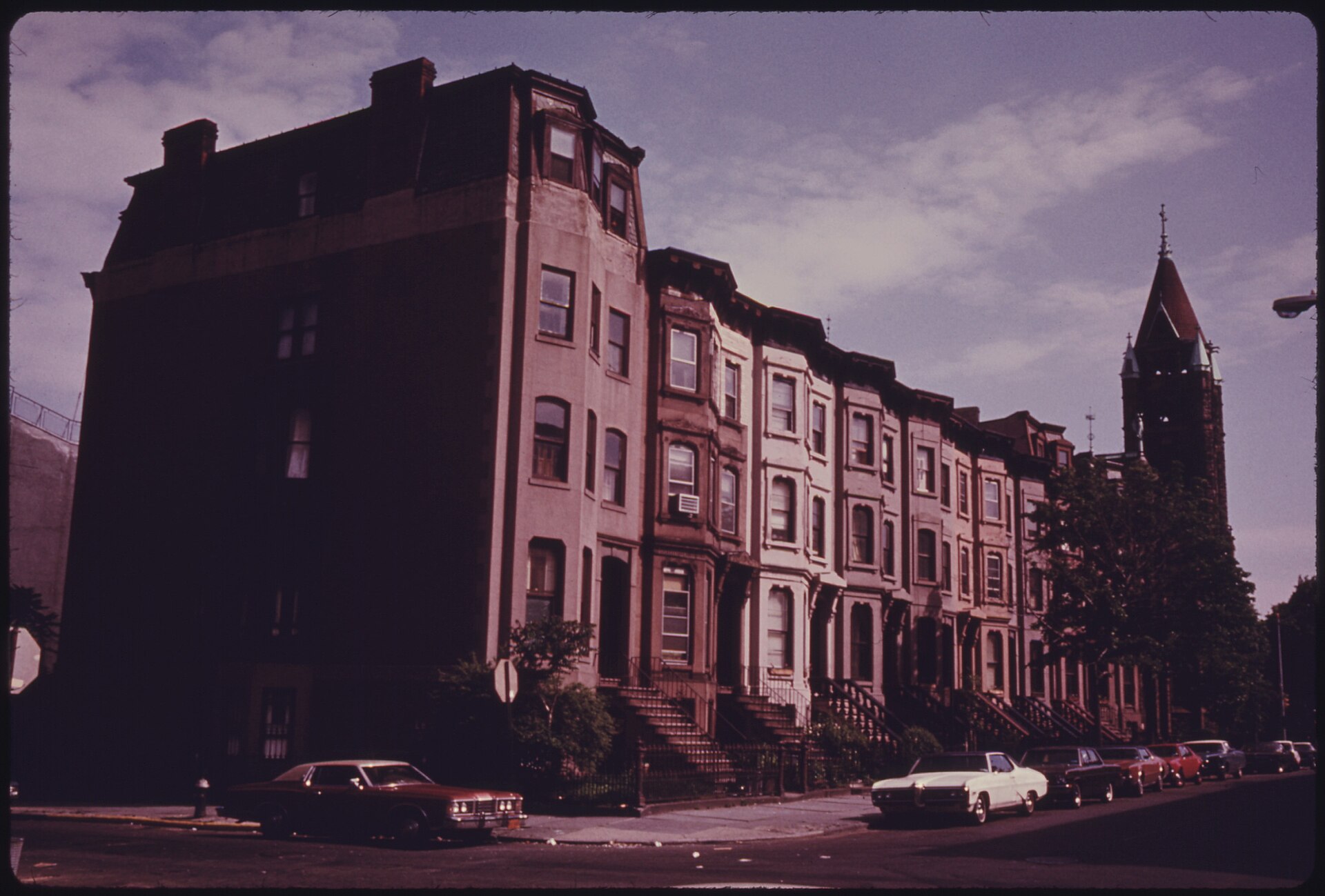
Brownstone row houses in Park Slope, Brooklyn. Most were built between 1870 and 1900, which is why so many Brooklyn addresses are walk-ups with original stoops.
Photo: Danny Lyon, U.S. National Archives · Public domainGetting around
The subway runs 24 hours a day on 472 stations, more than any other system in the world, and the distance from your door to the nearest entrance matters more here than the car parking that most American cities worry about.
Every address page on CheckYourPlace shows the nearest station, the lines that stop there and the walking route to the entrance, so a listing that says 'steps from the train' can be checked in seconds.
Economy and who lives where
Finance and insurance still anchor Manhattan south of Central Park, but the biggest employers citywide are health care and education. Tech grew along the Hudson Yards and Brooklyn waterfront corridors through the 2010s, which is what pulled rents up fastest in Long Island City, Williamsburg and Downtown Brooklyn.
Queens is the most linguistically diverse county in the country. Staten Island is the most suburban borough, with the highest rate of homeownership and the longest average commute. Those differences show up in the housing data long before they show up in a listing description.
Questions people ask about New York City
What does pre-war mean in New York?
A building finished before the Second World War, in practice before 1947. Pre-war usually means higher ceilings, thicker walls and solid floors, and often a walk-up with no central air conditioning.
How do I know if an apartment is rent stabilized?
Stabilization generally applies to buildings put up before 1974 with six or more apartments. CheckYourPlace flags the likely cases from the public tax record, and you can confirm by asking the landlord or the state for the rent history.
When does the landlord have to turn on the heat?
Heat season runs from October 1 to May 31. During it, the law sets minimum indoor temperatures by time of day, and hot water is required all year.
Search a street in New York City
Type a street name to see every number on it and the records for each address.
Photographs, plans and maps on this page come from public archives and are credited to their authors under the licence shown with each image. Figures are taken from public records and from our own building index, and no image on this page is generated.